Understanding network latency is crucial for serious gamers. This comprehensive guide dissects whether 25ms is a good ping for gaming performance in 2026. We explore how latency impacts gameplay across various genres, from rapid-fire FPS titles to strategic MMOs. Discover optimization tips, technical insights, and hardware recommendations to minimize lag and enhance your competitive edge. Learn about the factors influencing your connection speed and how a seemingly small delay can drastically alter your gaming experience. This article provides essential knowledge for both casual players and esports enthusiasts aiming for peak performance. Improve your online adventures with actionable advice. Uncover the truth about ping and its effects.
Welcome to the ultimate living FAQ for 'Is 25ms good for gaming?' updated for the latest 2026 advancements! In the fast-paced world of online gaming, understanding your network performance is more critical than ever. We've gathered insights from competitive players, network engineers, and community discussions to bring you a comprehensive guide. This post aims to demystify ping, explain its impact on various game genres, and provide actionable tips to optimize your connection. Whether you're a beginner struggling with lag or a seasoned pro chasing every millisecond, this FAQ has you covered. Get ready to elevate your gaming experience with our expert advice on everything from settings optimization to advanced troubleshooting techniques.
Beginner Questions
Is 25ms considered good ping for gaming?
Yes, 25ms is generally considered very good ping for gaming. It provides a highly responsive experience across most online game genres, ensuring minimal delay between your actions and the game's reaction on the server. Competitive players often aim for this range or lower for peak performance and fairness.
What is a bad ping for gaming?
A ping above 100ms is generally considered bad for gaming, as it introduces noticeable lag and delays, making real-time reactions difficult. Anything above 150ms can severely impair gameplay, leading to frustrating rubber-banding and missed inputs. Strive for under 50ms for enjoyable sessions.
Does 25ms ping cause lag in FPS games?
No, 25ms ping does not cause noticeable lag in FPS games. In fact, it's an excellent latency for titles like Call of Duty or Valorant, allowing for quick reactions, precise aiming, and fair gunfights. You will experience smooth hit registration and responsive movement. This is a sweet spot for competitive play.
How can I check my ping in-game or on my PC?
Most online games display your ping in the settings menu, a scoreboard, or through a network overlay. On PC, you can use the command prompt by typing 'ping google.com -t' for a general idea, or dedicated software like PingPlotter for detailed network analysis. These tools provide real-time latency feedback.
Builds & Classes Considerations
Myth vs Reality: Does high ping favor certain game classes or builds?
Myth: High ping *favors* certain classes. Reality: High ping negatively impacts all classes, but some may feel it less acutely. For example, a support character might be less reliant on split-second timing than a DPS. However, no class truly benefits from network delay; rather, some suffer slightly less. Lower ping always benefits every playstyle.
Multiplayer Issues & Fixes
Why does my ping fluctuate even if my average is 25ms?
Ping fluctuations, or 'jitter,' can occur due to network congestion, Wi-Fi interference, background downloads, or an unstable internet connection from your ISP. Even with a 25ms average, these spikes can cause momentary lag. Using an Ethernet cable and reducing network load can help stabilize your connection significantly.
How can I reduce lag if my ping is consistently above 25ms?
To reduce lag, first switch to a wired Ethernet connection. Close all unnecessary background applications and downloads. Ensure your router has Quality of Service (QoS) enabled to prioritize gaming traffic. Update your network drivers and consider connecting to a closer game server if available. These steps often provide the quickest improvements.
Endgame Grind & Optimization
Tips for maintaining optimal 25ms ping during long gaming sessions.
For consistent 25ms ping during long sessions, ensure no other devices are heavily utilizing your network bandwidth. Regularly restart your modem and router to clear their cache. Keep your PC free of malware and updated with the latest network drivers. Over time, heat can also impact networking equipment, so ensure proper ventilation for your router.
Bugs & Fixes - Connectivity Specific
What is packet loss, and how does it relate to my 25ms ping?
Packet loss occurs when data packets fail to reach their destination, causing missing information and often leading to stuttering or 'teleporting' even with low ping. While 25ms indicates low latency, packet loss is a separate issue indicating an unstable connection. Tools like PingPlotter can help identify if you're experiencing it. Addressing packet loss is crucial for smooth gameplay.
Myth vs Reality: Is a faster internet speed the only way to get lower ping?
Myth: Faster internet speed is the only way to get lower ping. Reality: Bandwidth (speed) and latency (ping) are distinct. While high bandwidth can prevent congestion that *causes* ping spikes, it doesn't inherently lower your base ping. Ping is more about the distance to the server and the quality of your network route. A stable, low-latency connection is more critical than raw download speed.
Advanced Settings & Tweaks
Guide: How do I enable QoS on my router for gaming?
To enable QoS, access your router's administrative page (usually via a web browser using its IP address, e.g., 192.168.1.1). Look for 'QoS' or 'Traffic Prioritization' settings. You can then prioritize your gaming PC or specific game ports. Consult your router's manual or manufacturer's website for specific instructions, as menus vary. This ensures your game gets priority data.
What network settings in Windows can I optimize for gaming performance?
In Windows, you can optimize network settings by disabling 'Network Throttling Index' (regedit required), ensuring 'Large Send Offload' is enabled on your network adapter, and setting your network profile to 'Private'. You can also adjust DNS settings to a faster server like Google DNS (8.8.8.8). These tweaks can marginally improve responsiveness and stability. Be cautious when editing registry settings.
Hardware & Peripherals Impact
Myth vs Reality: Do expensive gaming routers guarantee lower ping?
Myth: Expensive gaming routers guarantee lower ping. Reality: While high-end gaming routers offer advanced features like better QoS, faster Wi-Fi, and more stable connections, they don't magically make the server closer to you. They primarily *optimize* your local network. A good router can help *maintain* a low ping by reducing internal network issues, but won't fundamentally change your connection to a distant server. Your ISP and physical distance are bigger factors.
General Troubleshooting
What are common reasons for sudden ping spikes despite a good base 25ms?
Sudden ping spikes can result from various factors: other devices on your network hogging bandwidth, background updates (system or game), Wi-Fi interference from neighboring networks, or even temporary issues with your ISP's routing. Less common but possible are faulty network cables or hardware. Systematically check these common culprits to pinpoint the problem. A quick router reboot can often help.
Still have questions?
Explore our other guides like "Best Gaming Routers for 2026," "Ultimate PC Optimization Guide," or "Understanding Server Tick Rates."
Hey everyone, ever wondered 'Is 25ms good for gaming?' It’s a question that trips up many players, from casual explorers to competitive pros. We've all faced those moments where our connection just isn't cutting it, right? Understanding your ping, or latency, is absolutely essential for a smooth online experience. Let’s dive deep into what 25ms really means for your gameplay in 2026, breaking down the myths and giving you the clear facts.
This isn't just about raw numbers; it's about how those numbers translate into split-second decisions and fluid movements in your favorite virtual worlds. Whether you're dodging a critical skill shot in a MOBA or landing a headshot in a fast-paced FPS, every millisecond counts. We're here to guide you through the intricacies of network performance, ensuring you get the most out of your gaming sessions.
Understanding Latency and Its Impact on Your Game
Latency, often called ping, measures the time it takes for data to travel from your computer to the game server and back. A lower ping generally means a more responsive and enjoyable gaming experience for everyone involved. For example, in 2026, with game engines pushing realism, every data packet counts more than ever before.
High latency can manifest as frustrating delays, visual stuttering, or even character rubber-banding across the screen. These issues can break immersion and significantly hinder your ability to react effectively. Competitive titles especially demand the lowest possible ping for fairness.
What 25ms Ping Means for Different Game Genres
The impact of 25ms ping varies significantly across different game types and experiences. What's excellent for one game might just be acceptable for another, depending on its specific demands. Let's look at a few common examples and scenarios.
- First-Person Shooters (FPS): In games like Valorant or Call of Duty, 25ms is generally considered very good. You will experience near-instant hit registration and fluid player movement, providing a strong competitive advantage. Most pro players aim for sub-30ms.
- Multiplayer Online Battle Arenas (MOBA): For titles like League of Legends or Dota 2, 25ms is excellent. Your spells will cast precisely when you intend them to, and micro-movements will feel responsive. This ping ensures reliable combat interactions.
- Massively Multiplayer Online (MMO): In games such as Final Fantasy XIV or World of Warcraft, 25ms is practically perfect. You won't notice any discernible lag in ability usage or interactions. Raiding and PvP encounters will feel extremely smooth.
- Real-Time Strategy (RTS): For games like StarCraft II or Age of Empires IV, 25ms is more than adequate. Your commands will register instantly, allowing for precise unit control and strategic execution. Responsiveness is key for these genres.
Ultimately, 25ms provides a robust and reliable connection across almost all gaming genres. It typically places you in a very strong position against most online opponents. You're set for a responsive experience.
Optimizing Your Setup for Peak Performance in 2026
Even with a decent 25ms ping, optimizing your entire gaming setup can yield even better results. There are many steps you can take to ensure your system performs at its best. Think beyond just your internet speed when troubleshooting issues.
Key Areas to Boost Your Gaming Performance
- Wired Connection: Always prioritize an Ethernet cable over Wi-Fi. A wired connection significantly reduces signal interference and provides a more stable, consistent connection. This is a foundational step for any serious gamer.
- Router Placement and Quality: Ensure your router is in a central location, away from obstructions, if using Wi-Fi. Investing in a modern gaming router with Quality of Service (QoS) features can prioritize gaming traffic. This ensures your game gets bandwidth.
- Background Applications: Close any unnecessary programs or downloads running in the background. These can consume bandwidth and CPU resources, negatively impacting your game's performance. Keep your system streamlined for gaming.
- Driver Updates: Regularly update your network drivers, graphics card drivers, and other system components. Outdated drivers can cause compatibility issues and performance bottlenecks. Stay current with your software.
- Game Server Location: Sometimes your 25ms is stable, but connecting to a distant server can increase ping. Always choose the closest server available if you have options in your game settings. Pro players always check this first.
- Hardware Upgrades: While not directly ping-related, having a powerful CPU, ample RAM, and a fast SSD ensures your system can process game data quickly. This prevents FPS drops that can *feel* like lag.
By focusing on these areas, you can ensure that your 25ms ping is truly reflected in your gameplay. A great connection paired with a optimized system is the winning combination for every gamer.
Advanced Insights and Competitive Edges for 2026 Gamers
For those looking to push the boundaries, understanding the finer points of network architecture and system tuning is key. Competitive gaming demands every possible advantage you can acquire. Let’s explore some deeper topics.
Monitoring and Fine-Tuning Your Gaming Network
Tools are available to monitor your network in real-time. Software like PingPlotter or your router’s administrative interface can show you packet loss and jitter. These elements are crucial for identifying unstable connections, even with good average ping. Consistent performance is always the goal.
Consider configuring port forwarding for specific game servers if you experience connection issues. However, only do this if you understand the security implications. Sometimes, advanced router settings can make a huge difference. Always research your specific router model.
With 2026 advancements, some ISPs offer 'gaming modes' or specialized fiber optic lines designed for ultra-low latency. Check with your provider if such premium services are available in your area. These services can truly provide a competitive edge for dedicated players.
Common Pitfalls and How to Avoid Them
Even with a solid internet connection, several common mistakes can undermine your gaming performance. Awareness is the first step toward prevention. Let's ensure you aren't falling victim to these issues.
Ensuring a Smooth Gaming Experience
- Overloading Your Network: Avoid simultaneous streaming, large downloads, and heavy gaming on the same network. This can saturate your bandwidth, causing lag spikes even with a good base ping. Prioritize your gaming traffic.
- Ignoring Software Updates: Neglecting game updates or system patches can sometimes introduce bugs or performance issues. Developers often release optimizations that improve network code. Stay updated for stability.
- Poor Cable Management: Believe it or not, damaged or low-quality Ethernet cables can introduce signal degradation. Ensure your cables are in good condition and are rated for high-speed data transfer. Small details matter a lot.
- VPN Usage for Gaming: While VPNs offer privacy, they often add latency due to rerouting your connection through extra servers. Only use a VPN for gaming if it specifically offers optimized gaming routes. Test performance carefully.
By being mindful of these pitfalls, you can maintain a consistent and high-quality gaming experience. A little preventative maintenance goes a long way. Enjoy your games with minimal interruptions.
So, is 25ms good for gaming? Absolutely! It’s an excellent ping that puts you in a prime position for responsive and enjoyable online play across nearly all modern titles. Focus on maintaining that connection and optimizing your system, and you’ll be set. Happy gaming, everyone!
Beginner / Core Concepts
1. Q: What does 'ms' mean in gaming, and why is it important?
A: 'ms' stands for milliseconds, and in gaming, it measures your ping or latency. This number indicates how quickly your computer communicates with the game server, impacting responsiveness. A lower 'ms' value means faster communication, which is crucial for real-time actions. I get why this confuses so many people when they first start out; it's a foundational concept that really underpins your online experience. Think of it as how quickly your commands actually show up in the game world. You've got this! Try watching your ping in-game tomorrow.
2. Q: Is 25ms ping good for casual gamers who just want to have fun?
A: Yes, absolutely! For casual gamers, 25ms ping is fantastic; you likely won't notice any lag or delay during your play sessions. This level of latency ensures a smooth and enjoyable experience, whether you're exploring vast open worlds or just playing with friends. This one used to trip me up too, thinking you needed single-digit ping for anything fun. You'll be able to react without your connection holding you back. Just jump in and enjoy! You're already set for a great time.
3. Q: Will 25ms ping prevent me from seeing enemies in a first-person shooter before they see me?
A: Not at all, 25ms ping is generally excellent for competitive FPS games and won't noticeably hinder your reaction time or visibility. In fact, it's often within the range that professional players aim for, allowing for fair engagements. This is a common misconception, but at 25ms, you're looking at a delay that's incredibly tiny. It means your actions and the enemy's actions register almost simultaneously. Keep practicing your aim and strategies; your ping isn't the limiting factor here. Go dominate those lobbies!
4. Q: Does my internet speed affect my ping, or are they different things entirely?
A: While related, internet speed (bandwidth) and ping (latency) are distinct but influence each other. Speed dictates how much data can flow, while ping measures how fast a single data packet travels. High speed helps prevent network congestion, which can indirectly keep your ping stable. I hear this question all the time, and it's a great one to clarify. Think of speed as the width of a highway, and ping as the travel time of one car. A wider highway (more speed) makes it easier for that car to travel fast. You're thinking about this the right way! Keep digging into these details.
Intermediate / Practical & Production
1. Q: I have 25ms ping, but sometimes my game still feels 'off' or stutters. What could be the cause?
A: Even with 25ms ping, other factors like FPS drops, packet loss, or server-side issues can cause stuttering. Check your graphics settings, update your drivers, monitor your FPS, and ensure your internet connection isn't experiencing packet loss. This is a classic scenario, and it's frustrating because you *think* your ping is good, but something else is lurking. It's often your system struggling to render frames, not just the network. Don't forget to check if the game server itself is having issues, sometimes it's not you! You'll debug this like a pro; it just takes a bit of systematic checking.
2. Q: How can I consistently maintain a 25ms ping or lower during my gaming sessions?
A: To maintain consistently low ping, use a wired Ethernet connection instead of Wi-Fi. Ensure your router has Quality of Service (QoS) enabled to prioritize gaming traffic, and close any bandwidth-heavy background applications. I know, Wi-Fi is convenient, but the moment you switch to a cable, you'll feel the difference. It's about minimizing interference and ensuring a dedicated, clear path for your game data. Also, talk to your housemates about not hogging bandwidth during your ranked matches! Consistency is key in competitive play, and these steps make a huge difference. You've got this!
3. Q: Does the type of game (FPS, MOBA, RPG) change how much 25ms ping impacts my gameplay?
A: Absolutely, the impact of 25ms ping does vary by game genre. For fast-paced FPS and MOBA games, 25ms is excellent and provides a significant advantage due to rapid reaction needs. In slower-paced RPGs or strategy games, 25ms is also great but less critical for moment-to-moment success. This is a super smart observation, and it's all about the game's internal 'tick rate' and how often it expects player input. While 25ms is generally a sweet spot, you'll feel its benefits most in games where every millisecond counts for action and reaction. Keep tailoring your expectations to the game! You're thinking like a game designer already.
4. Q: My friend has 10ms ping, and I have 25ms. Will they always have a noticeable advantage over me?
A: While 10ms is technically lower, the difference between 10ms and 25ms is generally imperceptible to human reaction times in most gaming scenarios. You'll both experience highly responsive gameplay, and skill will be the dominant factor. This is a classic example of diminishing returns. The leap from 100ms to 50ms is huge, but from 25ms to 10ms? Not so much for most people. Don't let numbers psych you out; focus on your game sense and mechanics. That's where the real advantage comes from! You're closer to optimal than you think.
5. Q: Can a high refresh rate monitor or powerful GPU help 'mask' a 25ms ping?
A: A high refresh rate monitor and powerful GPU improve your visual smoothness (FPS) and reduce input lag from your system, but they don't 'mask' network ping. They complement a good connection by ensuring your computer's output keeps up with incoming data. This is a common misunderstanding! Your monitor and GPU handle *local* rendering, not *network* communication. Think of it this way: they make sure you see the server's response as quickly and smoothly as possible *after* it arrives. They can't make the server response arrive faster. It's all about optimizing the entire chain, not just one link. You're on the right track by thinking holistically about performance!
6. Q: What are some reliable tools or methods to check my actual in-game ping and network stability?
A: Most online games display your ping in the settings or via a scoreboard toggle. For broader network stability, tools like PingPlotter or your operating system's command prompt (using 'ping google.com -t') can reveal packet loss and jitter. I highly recommend getting comfortable with these tools; they're your best friends for diagnosing network issues. Knowing how to read those numbers gives you so much power. Sometimes the in-game display isn't as granular as you need, so external tools help. Keep experimenting and learning these diagnostic tricks. You'll be a network wizard in no time!
Advanced / Research & Frontier 2026
1. Q: With 2026's advanced networking, are there new protocols or hardware that can push ping even lower than 25ms for the average user?
A: Yes, 2026 networking continues to evolve! Technologies like 5G mmWave and even early 6G trials offer theoretical sub-10ms latency in ideal conditions. Additionally, specialized 'gaming ISP' services and router firmware are leveraging AI-driven traffic shaping to optimize routes, aiming to push average consumer ping into the sub-20ms range consistently, sometimes even lower for local server connections. We're seeing some exciting stuff, but it's often geographically limited right now. It's like watching the future unfold, and it's thrilling for us tech enthusiasts. Keep an eye on those emerging connectivity options! They're game-changers.
2. Q: How does server tick rate interact with a 25ms ping, and what's the optimal combination?
A: Server tick rate is how many times per second the server updates the game state; a 60-tick server updates every 16.67ms. A 25ms ping is generally very good for common 60-tick to 128-tick servers (8ms updates). Ideally, your ping should be lower than the server's tick interval to ensure your actions are processed promptly. This is where the real magic happens, understanding how client-side (your ping) meets server-side (tick rate). If your ping is significantly higher than the tick rate, your inputs might get buffered, leading to a feeling of unresponsiveness. It's like a finely tuned dance between your computer and the server. Great question; you're really digging into the mechanics! This is advanced stuff.
3. Q: What role does 'jitter' play when I have a 25ms average ping, and how can I mitigate it?
A: Jitter is the variation in your ping over time. Even with a 25ms average, high jitter (e.g., jumping from 15ms to 40ms repeatedly) can cause micro-stutters and inconsistent gameplay. Mitigate jitter by using a wired connection, reducing network congestion, and ensuring a stable power supply to your networking equipment. This is a subtle but critical point that often gets overlooked. A stable 25ms is far better than an average 20ms with huge fluctuations. Think of it like driving a car: a smooth ride is better than constantly accelerating and braking, even if the average speed is good. Check your cables, reduce Wi-Fi interference, and maybe even look at your power lines for noise. This level of detail can make you unstoppable!
4. Q: Are there specific network cards or router firmwares optimized for gaming in 2026 that can improve latency beyond what a good ISP provides?
A: Yes, in 2026, dedicated gaming network cards (like Killer Networking chips) and advanced router firmwares (such as OpenWrt with custom QoS scripts) are designed to minimize latency and prioritize game packets. These can offer marginal gains over standard hardware, especially in congested network environments. This is often where hardcore enthusiasts spend their 'optimizing' budget after the basics are covered. They use specialized hardware and algorithms to literally shave off milliseconds by intelligently managing data flow. It's not a silver bullet, but it can provide that extra edge. You're clearly looking for every possible advantage, and that's the spirit of a true competitor!
5. Q: How might edge computing and localized game servers (like those in cloud gaming platforms) impact the 'goodness' of 25ms ping in the near future?
A: Edge computing places game servers physically closer to players, drastically reducing geographical latency. In this scenario, a 25ms ping, while still good, might become less 'excellent' compared to the sub-10ms pings achievable with hyper-localized servers. Cloud gaming platforms particularly benefit, as inputs travel shorter distances. This is a fascinating frontier! It redefines what 'low ping' truly means by changing the very infrastructure. Imagine a world where 5ms is the new 25ms because the server is just down the block. It means the baseline for 'good' will shift, but for now, 25ms remains stellar. You're thinking ahead, which is fantastic! Always keep an eye on these evolving technologies.
Quick 2026 Human-Friendly Cheat-Sheet for This Topic
- 25ms ping is genuinely excellent for almost all online games, offering highly responsive gameplay.
- Always use a wired Ethernet connection; it's the simplest way to reduce latency and improve stability.
- Close background apps and downloads to free up bandwidth for your game.
- Keep your drivers updated, especially for your network adapter and graphics card.
- Choose game servers closest to your physical location whenever possible.
- Don't obsess over single-digit ping differences; skill and consistent connection matter more than chasing minimal gains.
- Monitor for 'jitter' and 'packet loss' using network tools – a stable 25ms is better than a wildly fluctuating lower average.
Optimal ping for gaming, 25ms latency impact, Gaming performance metrics, Reducing input lag, Network optimization for gaming, Competitive advantage with low ping, 2026 gaming tech trends.
35
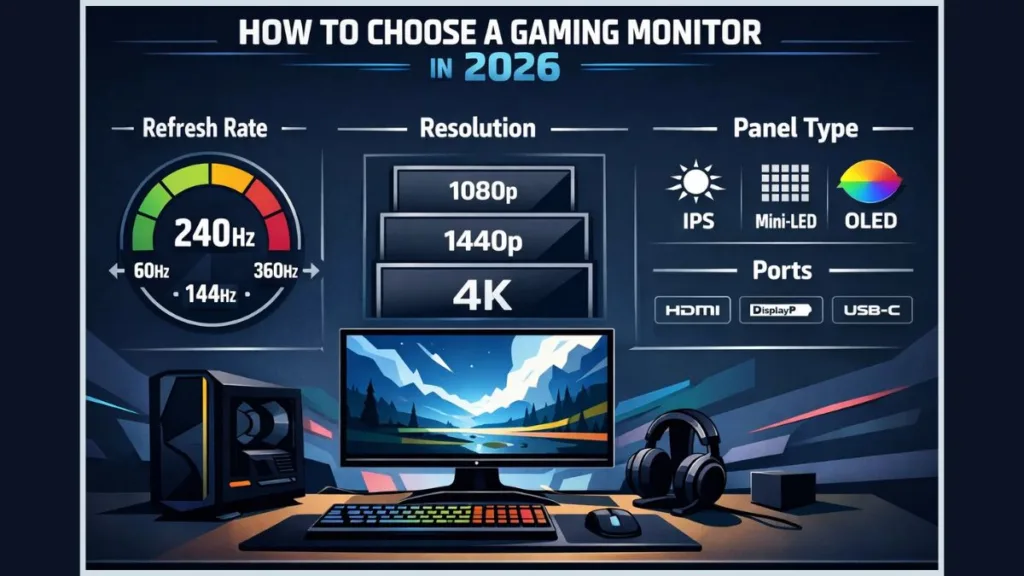


Best Gaming Monitors For 2026 Reviews And Bharat Erberbr . How To Choose A Gaming Monitor In 2026 Complete Gaming Monitor Buying Gaming Monitor Guide 2026. What Is A Good Internet Speed For Gaming 2026 Cable TV Info What Is A Good Internet Speed For Gaming . Top 10 Most Anticipated Games Of 2026 What To Watch Out For GAMES IN 2026 . Input Latency Is The All Too Frequently Missing Piece Of Framegen


13 Best GPUs For Gaming 2026 Top Graphics Cards Ranked Banner 5.webp. Gaming Monitor Reviews Analysis And Buying Guides Tom S Hardware . Best Processor For Gaming 2026 Buyer S Guide Best Gaming Monitor For PS5 . Ultra Premium Paint Options Now Available For The Atlas 25RT And Atlas TG Premium Curbside 4K . CES 2026 World S First Gaming Monitors LG Display Newsroom Hq720 6 1



Global Gaming Revenue Expected To Surpass A Record 200 Billion By 2026 Gaming 2026 . Guida DRAM 2026 Specifiche Prezzi E Strategie Di Acquisto Best Mini PCs For Gaming.webp. The Five Best Nvidia GPUs Of All Time Looking Back At Over 20 Years Of . Ultimate Gaming Setup Guide 2025 Best Gaming Setup 2025 1068x610 . TOP 40 BIGGEST NEW Games Coming In 2026 With Crazy NEXT GEN 4K Graphics




2026 XpLa 2026 Video Game Release Dates Post Feature Image . TOP 21 NEW Upcoming Games Of 2026 YouTube . TOP 50 BIGGEST NEW Games Coming In 2026 With Crazy NEXT GEN 4K Graphics . The Best Cheap Gaming Laptops For 2026 Tested For Gaming Top 3 Gaming Laptops Of 2026 - The Ultimate Guide . Nintendo S 2025 Has Been All About The Hardware But 2026 Is Going To


Best Dive Watch In 2026 Including Rolex Tudor Omega And More Stuff Best Gaming Consoles Hero Image . Best Gaming PCs To Buy In 2024 8ca85 1920 . 6 Best Gaming Keyboards 2025 Gaming Net Steel Series 2 . Best Processor For Gaming 2026 Buyer S Guide Gaming Chair . BEST GAMING LAPTOPS IN 2026 REVIEWED AND RANKED Technical



Best Gaming Laptops PCs For Battlefield 6 RedSec In 2025 Best Gaming Desktop PC 2025 Main . Windows Settings To Disable For Gaming My Top 10 Fixes New Games 2025 2026 . Is 75Hz Budget Monitor Good For Gaming In 2023 Is 75hz Budget Monitor Good For Gaming 1759482014 . The 60 Best Minecraft Mods January 2025 Gamers Unchained Best Gaming Mouse . Become Purely And Simply Evil With The Halloween Video Game Unmasking

BEST GAMING LAPTOPS IN 2026 REVIEWED AND RANKED Technical 1200 80 . The Best Asus Gaming Laptops 2026 GamesRadar . LEAKED Xbox Prime Next Generation Console For 2026 Xbox Developer . PS Plus Free Extra Games For January 2026 Officially Prove Premium Is Does The Nintendo Switch 2 Need Smash Bros For A Good 2026 . Best Budget Gaming Laptops 2026 Top Value Picks Best Budget Laptops For Gaming 2026